Newsletter Subscribe
Enter your email address below and subscribe to our newsletter

 ByJohn A
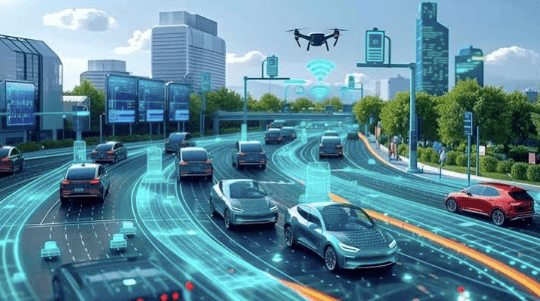
AI-driven traffic management blends real-time sensing with predictive analytics to optimize signal timing and flow. Data from sensors, cameras, and edge devices informs adaptive control at intersections, aiming to reduce congestion and emissions. Governance, privacy, and risk considerations shape implementation alongside urban-planning metrics. While evidence supports gains in efficiency, questions remain about equity, accountability, and long-term resilience, inviting further scrutiny of how these systems scale and endure under varied conditions.
AI-driven traffic management refers to the use of artificial intelligence and related data analytics to monitor, predict, and control transportation networks in real time. This approach enables adaptive prioritization, reduced congestion, and improved safety. However, it necessitates robust AI ethics, stringent data stewardship, and transparent autonomous signaling. Public engagement ensures accountability, legitimacy, and informed consent within evolving mobility policies.
Data feeds form the backbone of modern intersection control, translating real-time sensor inputs into actionable signal decisions that balance efficiency and safety.
This analysis assesses data ethics, sensor reliability, and privacy concerns within data fusion and edge computing frameworks.
Congestion forecasting informs adaptive signaling, while incident detection supports MOE governance; deployment risk must be mitigated to sustain transparent, freedom-oriented urban mobility.
Predictive analytics and adaptive control enable real-time congestion reduction by anticipating demand patterns and adjusting signal timing before bottlenecks form. The approach synthesizes traffic data, weather, and events to optimize throughput, reduce delays, and lower emissions. Evidence supports measurable benefits from real time optimization, while policy considerations emphasize transparency, accountability, and equitable access to improved mobility through adaptive control.
See also: touristatre
How can cities ensure that AI-enabled traffic systems align with long-term urban objectives, governance standards, and public accountability?
Aligning AI with planning necessitates measurable metrics, transparent governance, and rigorous risk assessment. Data governance and ethical guidelines should underpin procurement, deployment, and auditing. Evidence-informed calibrations reduce bias, protect privacy, and sustain legitimacy, while independent oversight reinforces trust and resilient, adaptable urban mobility outcomes.
Privacy safeguards and anomaly detection are essential; data minimization and differential privacy reduce exposure, while ongoing auditing ensures compliance. An analytical, policy-focused approach demonstrates how safeguards support freedom, accountability, and trust in AI-driven traffic systems.
A notable 42% efficiency gain in urban signals frames the cost analysis: implementing AI traffic systems incurs upfront analytics, sensor upgrades, and ongoing maintenance. Despite potential savings, implementation challenges include interoperability, data governance, and long-term funding uncertainties.
Unforeseen events are addressed via anomaly detection and continuous system monitoring responsibilities, with privacy protection and privacy preserving analytics guiding data use; costs of deployment are weighed against equity in adaptation and bias mitigation.
The question centers on governance: who monitors AI decision-making? Who governs AI, accountability frameworks. An independent oversight body, complemented by robust auditing, transparent reporting, and ongoing risk assessment, ensures accountability for automated decisions amid evolving, evidence-driven policy requirements.
Equity is pursued by anchoring standards in data transparency and inclusive stakeholder review, mitigating deployment disparities. Allegory: a balanced scale calibrates traffic fairness, yet evidence-driven policies ensure equity considerations guide adaptive signals and remedy biased outcomes.
In sum, AI-driven traffic management promises measurable gains in flow, safety, and equity while embedding governance and risk controls. The system can be viewed as a living urban circulatory map, continuously adapting to demand, weather, and events. Yet success hinges on transparent oversight, robust data ethics, and rigorous evaluation of metrics, costs, and unintended effects. When aligned with planning and public engagement, smart traffic becomes a resilient, accountable engine for freer, more efficient mobility.